Crossroads Montréal
Crossroads Montréal
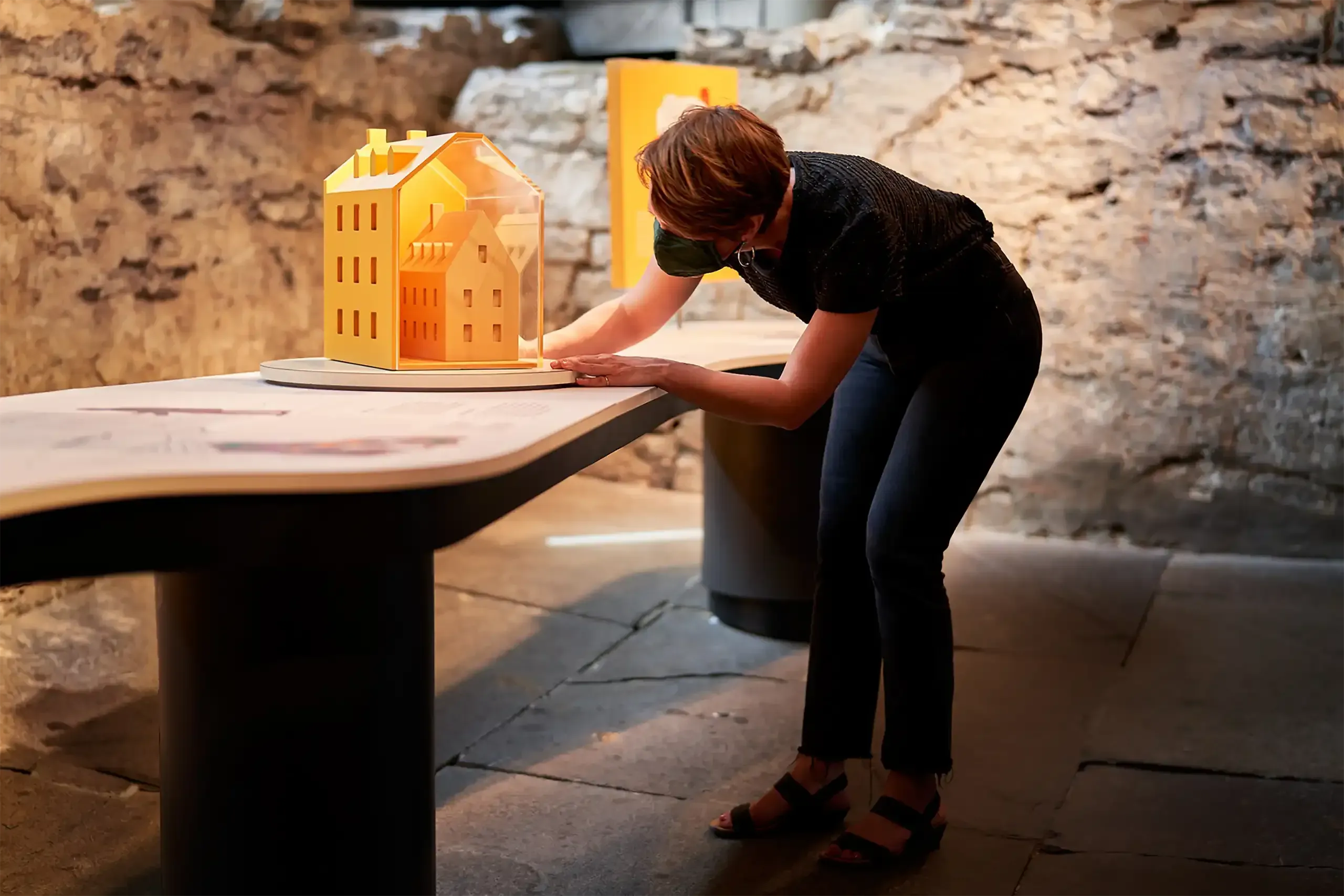

Pointe-à-Callière’s Éperon Pavilion is at the heart of Montreal’s history. This is the place where visitors can explore the authentic archeological remains of Montreal at its founding location.
The stories the ruins tell
Entering the exhibition, visitors immediately recognize the value of this historical and archaeological site. The moment feels reverential: this is the founding site of Montreal — its heart centre. Visitors can wander freely through the site, which includes the authentic remains of the first Catholic cemetery in Ville-Marie, established in 1643, and the Royal Insurance building, which existed from 1861 to 1951.
 Romain Guibault - GSM Studios
The revamping of the Montréal Crossroads exhibition is part of the ongoing revitalization of the Museum’s permanent exhibitions, which have taken place over the past few years.
 Romain Guibault - GSM Studios
 Romain Guibault - GSM Studios
 Romain Guibault - GSM Studios
Preserving a precious heritage site
The set design does more than just showcase the visible traces of the site and its successive occupation, it also preserves the site as an artifact. The design enhances the archaeological heritage while ensuring its long term integrity and conservation.
 Digital screens showcase the façade of the Royal Insurance building (left). Patrick Desrochers - Pointe-à-Callière
As time goes by
The exhibition's graphic concept makes use of solid masses and fluid lines to represent the historical and archaeological layers of this place. In harmony with the look-and-feel of the remains, the colour palette of the exhibition blends in with the remains on display. To further humanize and contextualize the remains, integrated illustrations and visuals throughout the exhibition are designed to catch the eye of visitors.
 Colourful graphics work with the Museum’s visual identity. A series of five waves organize the graphics, helping differentiate unique time periods, archeological remains, and the evolution of the Éperon Pavilion and Pointe-à-Callière.
 Romain Guibault - GSM Studios
Memories as touchstones to the story
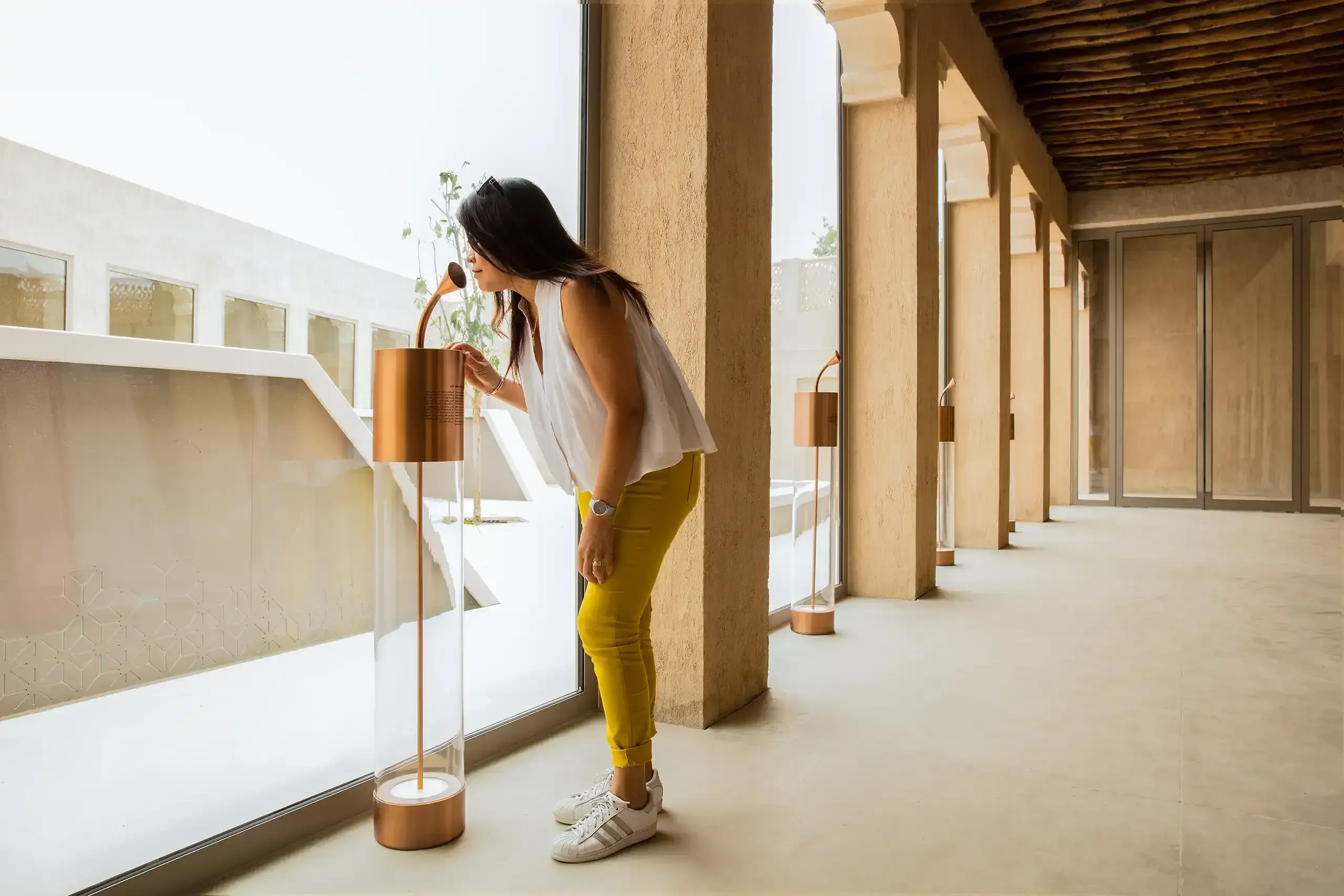
A wide variety of interactive and multimedia installations encourage visitors to make connections with the human stories associated with this place. At one station, visitors can gather together around a digital campfire where they meet First Nations elders, artists, and storytellers Stephen McComber (Haudenosaunee), Dominique Rankin (Anicinape), and Andrée Lévesque Sioui (Wendat). They share songs and stories in their native language, wrapping visitors in the spirit of the site.
 Pointe-à-Callière, Cité d'histoire et d'archéologie de Montréal
 Romain Guibault, GSM Studios / Visitors can trigger video projections of historical figures or ancestral stories.
GSM’s concept for the redesign is to put the visitor at the heart of the story, to offer them both a meaningful and adventurous experience with history.
 Pointe-à-Callière, Cité d'histoire et d'archéologie de Montréal
Connecting past to present
To both engage and surprise visitors, GSM used contemporary technological means to create the experiences. Visitors can explore a map of the French city, dated around 1708, via a digital interactive that resembles a famous Web mapping platform (we will let you guess which one...). A video projection on the wall of Montreal's first Catholic cemetery evokes a funeral procession. Some contemporary stories are told in traditional First Nation languages to foster a sense of belonging. This contemporary approach lets visitors immerse themselves in the rich history of this place without reinterpreting it, and really experience the humanity in its history.
 Pointe-à-Callière, Cité d'histoire et d'archéologie de Montréal
 Romain Guibault, GSM Studios / An interactive digital map immerses visitors in the design of Montreal at the start of the 18th c., guiding them through the city streets and interpreting its organization during that time
 Romain Guibault, GSM Studios / A 50-word lexicon of the three First Nations languages present in the region invites visitors to learn more about these important cultures. Romain Guibault - GSM Project
GSM designed the previous version of Montreal Crossroads. The site has remained the same, but our perspective on that history has evolved — in its humanity and its tenderness
 Romain Guibault - GSM Studios
 Romain Guibault - GSM Studios / An interactive provides the details of the The Great Peace of Montréal Treaty (1701), an unprecedented diplomatic event between 39 Indigenous nations and French people.
 Romain Guibault - GSM Studios
 Romain Guibault - GSM Studios
An inclusive museum design approach
The exhibition is the result of recent historical and archaeological discoveries. An advisory committee made up of members of Indigenous communities, archaeologists, historians, and anthropologists guided the Museum through the development of its exhibition content. In addition to the 150 artefacts and objects on display, highlighted remains, light and sound projections, video animation, interactive stations, and works of art—including some by contemporary Indigenous artists—work together to create an active dialogue between the past and the present.
 Romain Guibault - GSM Studios / Tiohtià:ke, a contemporary collective artwork, crafted by Angel Horn, a traditional Kanien'kehá:ka artist from Kahnawake.
 Romain Guibault - GSM Studios / Illustrations put artifacts in their historical context Romain Guibault - GSM Project
Summary
In 2021, GSM designed and produced new visitor experiences in the permanent exhibition, Montreal Crossroads. This exhibition is part of the Éperon Pavilion, located in Pointe-à-Callière’s main building. This renewal updates an exhibition that GSM Project had the opportunity to first design when the museum opened in 1992!

Together we create meaning
Audiences seek emotional and educational connections that inspire