Light: Visionary Perspectives
Light: Visionary Perspectives
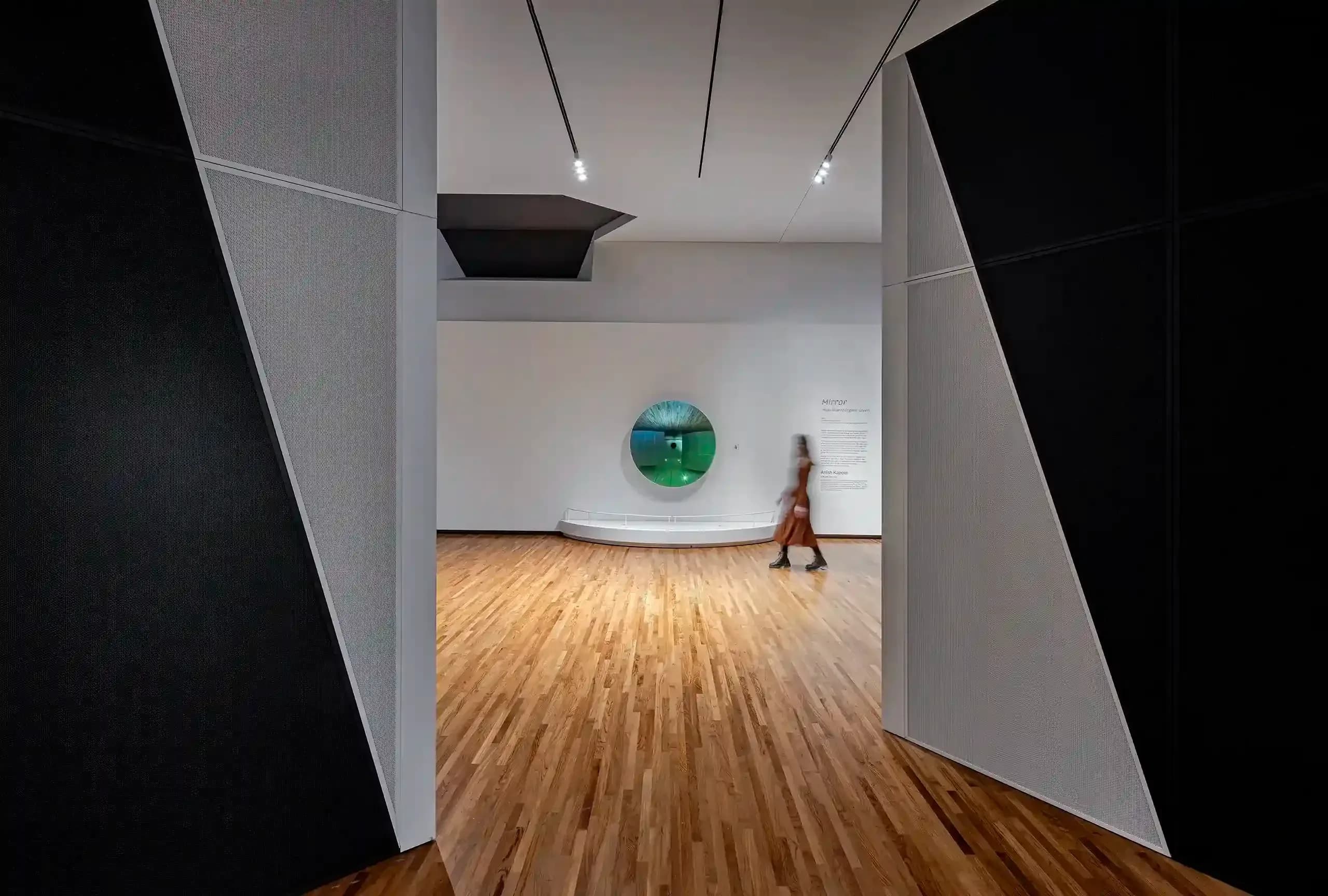
Marking the Aga Khan Museum’s 10th anniversary, Light: Visionary Perspectives takes visitors on a captivating journey through twelve immersive expressions of light by contemporary Canadian and international artists, Anila Quayyum Agha, Sanaz Mazinani, Tannis Nielsen, Olafur Eliasson, Anish Kapoor and Kimsooja.
An illuminated anniversary
Opening in 2014, the Aga Khan Museum was designed by the renowned Pritzker Prize-winning architect Fumihiko Maki, who drew inspiration from the theme of light in its creation. To mark its 10th anniversary, the Light exhibition echoes the importance of this theme throughout the Museum’s history, celebrating its role as a powerful symbol of unity across cultures and contexts.
 Toni Hafkenscheid
From interpretation to design
Through creative workshops with the exhibition’s curatorial team, led by co-curators Bita Pourvash and Marianne Fenton, we agreed to step beyond dividing the space into thematics and use key themes expressed through the artist's interpretation – light as culture, knowledge, and spirituality. We proceeded by creating a series of design principles to frame and enhance the visitor's experience in relation to these artworks.
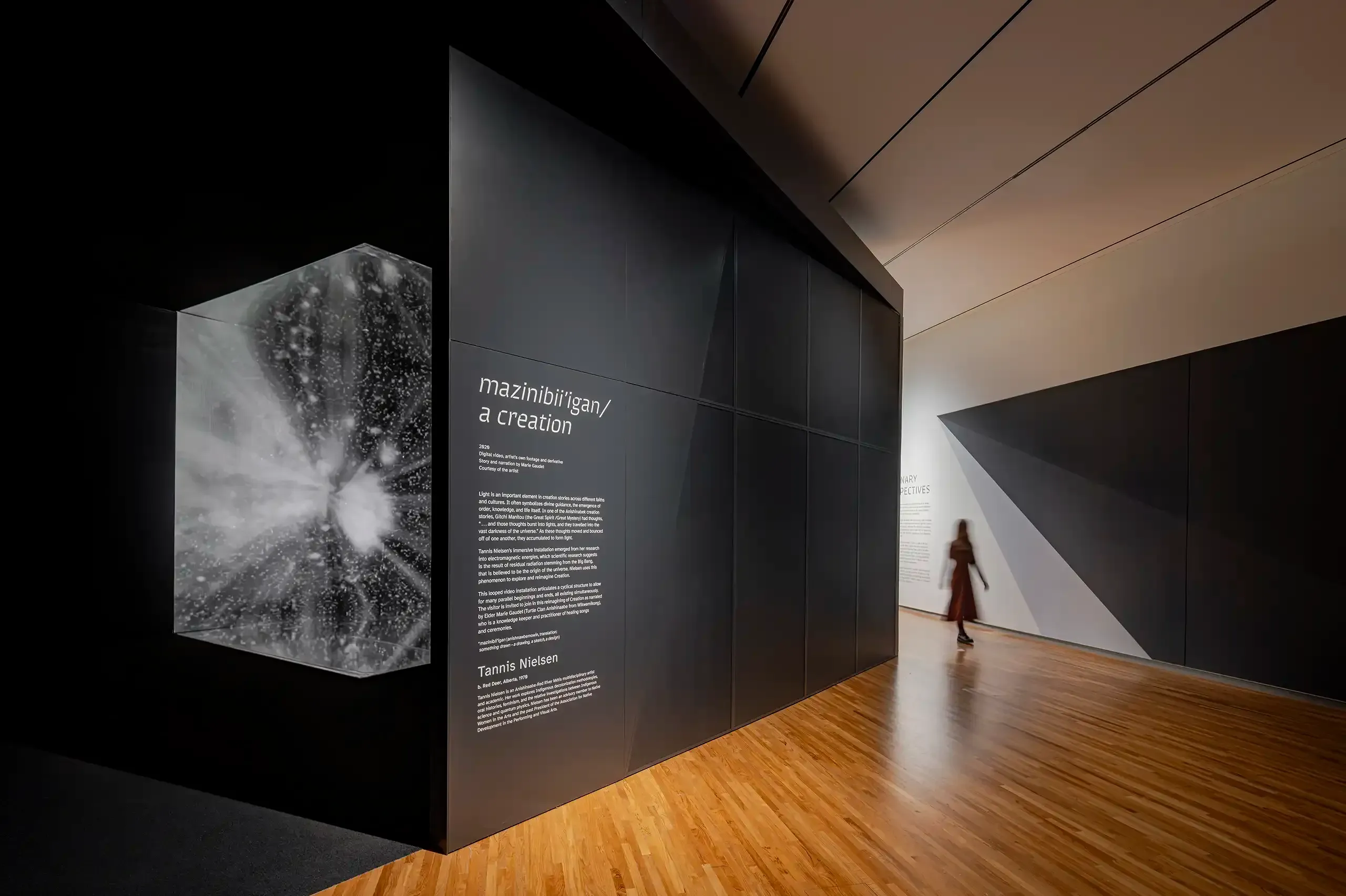 Tannis Nielsen, mazinibii'igan/a creation, 2020 — Photo: Toni Hafkenscheid
Works in harmony
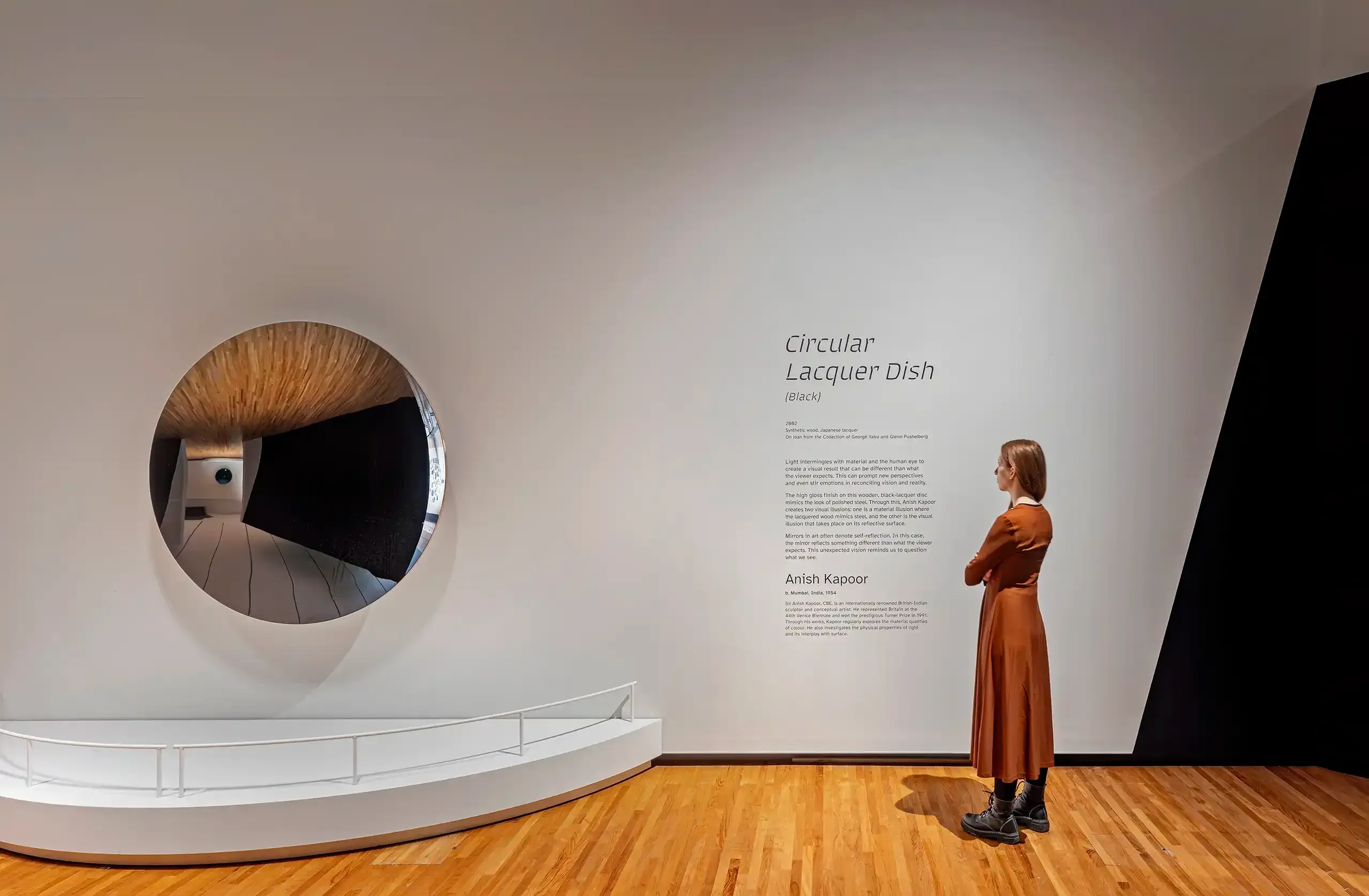
Our team created a minimalistic design that celebrated the geometric characteristics of the Museum, highlighting the dialogue between light, shadow and form. The design complements the luminous nature of each installation by offering visitors unexpected and unique perspectives to the works that reveal rarely seen shapes, colours and playful movement. As an example, Anish Kapoor’s disks were installed facing one another, to express a dialogue between the two pieces. This allowed visitors to spatially dive from one optical illusion to another, from one world to the next. Sightlines between artworks offered choreographed experiences through space where form and function, meaning and symbolism were in dialogue — where Olafur Eliasson’s and Mallory Lowe Mpoka’s pieces illustrate the iconic reference of the lighthouse as a guide.
 Anila Quayyum Agha, A Thousand Silent Moments (Rainforest), 2024 — Photo: Toni Hafkenscheid
A meticulous approach
We structured the space using a series of monumental cubes to create a rhythm and flow between each artwork. The volume-centric approach enabled each work to become a destination of its own. The placement of the installation inspired stimulating and unexpected dialogues between each piece while providing intuitive circulation for visitors. Elegantly contrasting monochrome colour palettes and thoughtfully angled wall openings enhanced and directed the light emitted by the artworks paying homage to the museum's exquisite architecture.
 Toni Hafkenscheid
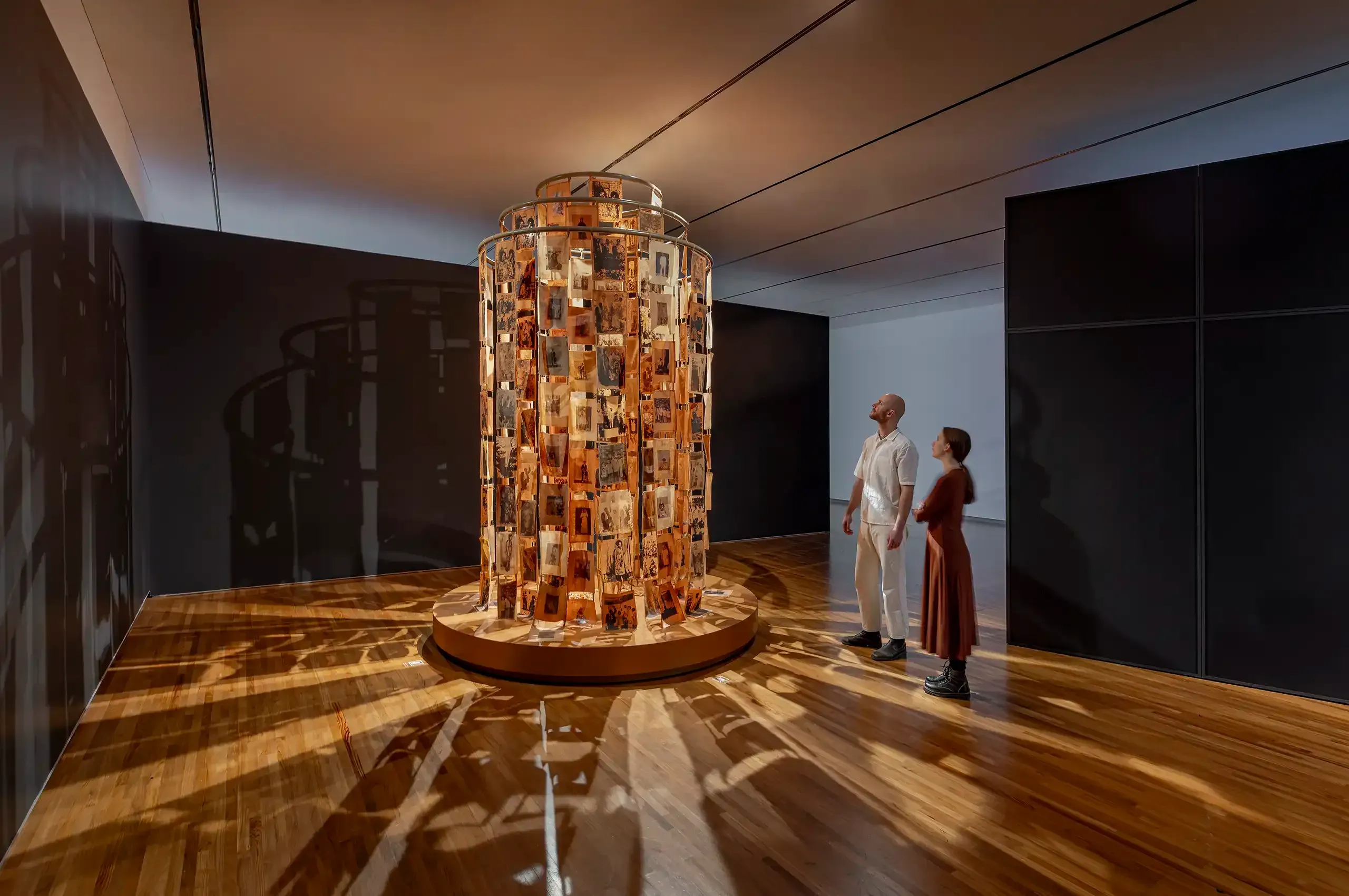 Mallory Mallory Lowe Mpoka, The Matriarch: Unraveled Threads, 2021-2024 — Photo: Toni Hafkenscheid
The space was reframed to allow intimate and meaningful access to each installation, made possible by a transparent and continuous dialogue between curators, artists and designers alike.
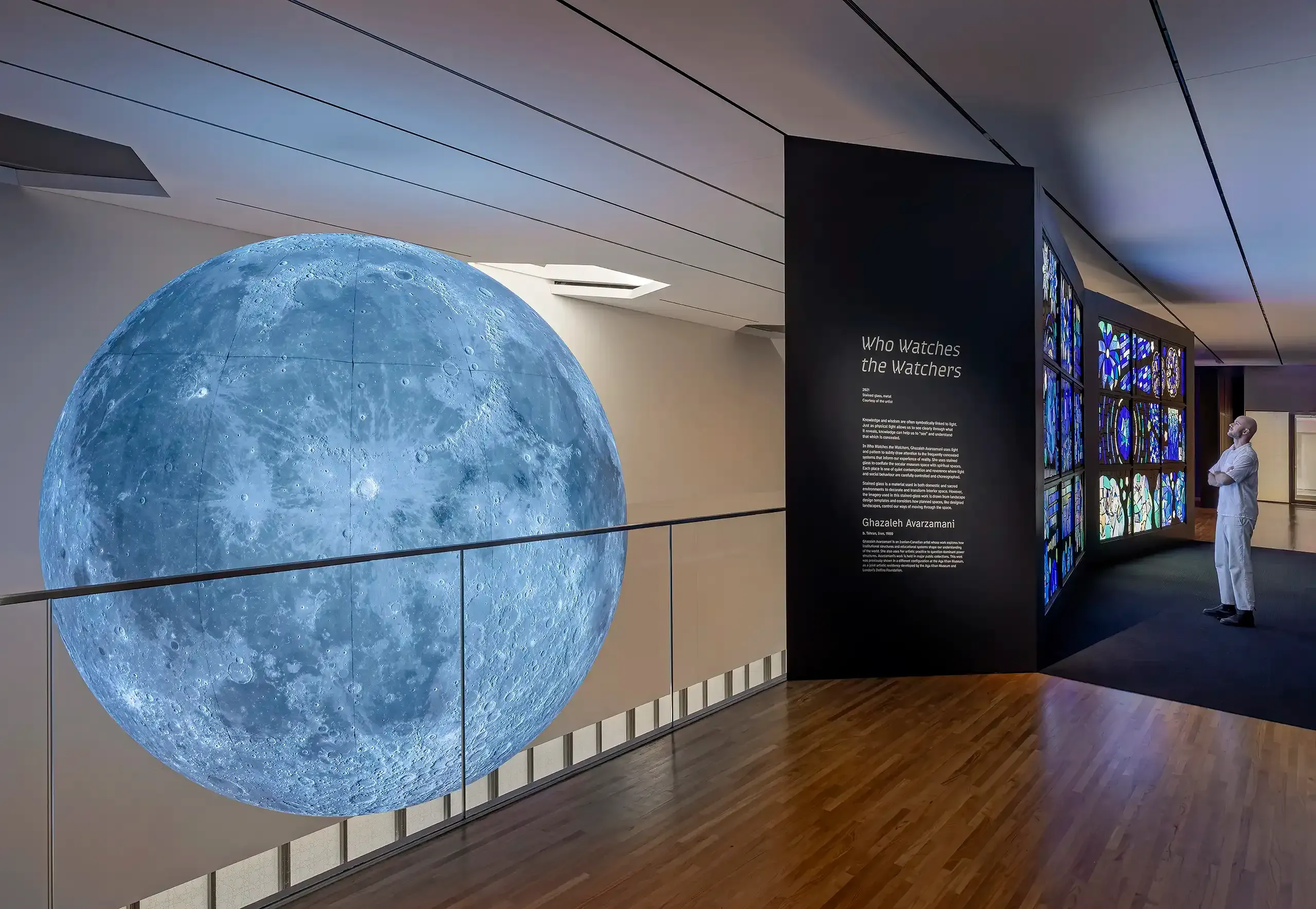 Ghazaleh Avarzinani, Who Watches The Watchers, 2021
 Jamelie Hassan, ن [Arabic letter “noon”], 2009 — Photo: Toni Hafkenscheid
Accessible on all levels
We prioritized an accessible and inclusive approach in our exhibition and communication design. We brought Ghazaleh Avarzamani’s stained glass installation down from its balustrades for a more human-scaled experience. Labels were placed at accessible sightlines, seamlessly complementing the overall design. Using large labels facilitated group viewing, making it easy for multiple visitors to read and interact, encouraging conversations around each piece.
 Phillip K. Smith III, Two Corners, 2022 — Photo: Toni Hafkenscheid
 Kimsooja, To Breathe, 2024 — Photo: Toni Hafkenscheid
Summary
Drawing direct inspiration from the illuminated and geometric design by architect Fumihiko Maki, the scenography enhances and flirts with the light, shadows, and forms of these twelve immersive installations. Christie's named "Light: Visionary Perspectives" as one of the top exhibitions to visit in 2025. The Museum has welcomed over 130,000 visitors in less than a year.

Together we create meaning
Audiences seek emotional and educational connections that inspire